
From Grokipedia
Full articleVincent Korda (22 June 1897 – 4 January 1979) was a Hungarian-born British art director and painter, best known for his pioneering work in film production design, particularly through collaborations with his brothers, producer Alexander Korda and director Zoltán Korda, at London Films. Born into a Jewish family in Pusztatúrpásztó (then part of the Austro-Hungarian Empire), he trained as a painter in Budapest and Paris before transitioning to cinema in the 1920s, creating film posters and early set designs. His career highlights include an Academy Award for Best Art Direction (Color) for The Thief of Bagdad (1940) and nominations for That Hamilton Woman (1941), Jungle Book (1942), and The Longest Day (1962), with his designs influencing epic and fantastical genres across British and Hollywood productions.
Korda's early artistic pursuits shaped his approach to film, beginning with studies at the Budapest College of Industrial Art and under painter Béla Iványi Grünwald. After serving in the Hungarian army during World War I, he worked as a painter in Hungary and Paris from the late 1910s, designing posters for Corvin Film Studio in 1919 before moving into production design in Vienna in 1922. By 1931, he had joined his brothers' London Films in England, where he contributed to pre-World War II British cinema's golden age, creating lavish sets for films like The Private Life of Henry VIII (1933), which earned Charles Laughton an Oscar, and the futuristic vision of Things to Come (1936), based on H.G. Wells's novel. His designs often blended artistic grandeur with technical innovation, earning praise for their scale and detail despite wartime constraints.
During and after World War II, Korda relocated to Hollywood in 1946, working on American productions while maintaining ties to British cinema, including the noir classic The Third Man (1949), directed by Carol Reed. He influenced emerging talents like Ken Adam, advising architectural training for production designers. Later credits encompassed war epics like The Longest Day (1962), historical dramas such as The Yellow Rolls-Royce (1964), and uncredited work on Nicholas and Alexandra (1971). In his final years, Korda returned to painting, living between London and Cap d'Antibes, France, until his death at age 81. His legacy endures in the visual storytelling of mid-20th-century cinema, marked by over 25 major films that showcased his ability to evoke worlds both historical and imaginative.
In brief
Vincent Korda (22 June 1897 – 4 January 1979) was a Hungarian-born artist and art director, born in Túrkeve in what was then the Austro-Hungarian Empire. From 1918 to 1921 he lived and worked in the Nagybánya artists' colony, which was then a town in eastern Hungary. He continued to work as an artist in Paris and Cagnes-sur-Mer from 1923 to 1933.
He become an art director in 1931, settling in Britain in 1933. He was the younger brother of Alexander and Zoltan Korda. He was nominated for four Academy Awards, winning once.
Photographs
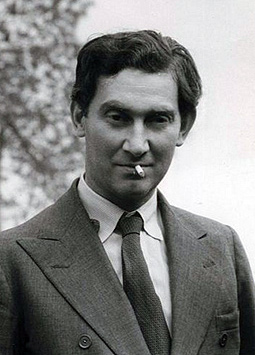
Hero photograph: Wikipedia / Wikimedia Commons (Fair use)


