
From Grokipedia
Full articleDavid Raksin (August 4, 1912 – August 9, 2004) was an American composer best known for his prolific work in film and television scoring, including the iconic theme for the 1944 film noir classic Laura, which has been recorded over 400 times and became a standard in the Great American Songbook.
Born in Philadelphia, Pennsylvania, to a family of Russian Jewish heritage, Raksin was the eldest of three sons; his father, Isidore Raksin, was a conductor and performer who introduced him to music by giving him a clarinet, which the young Raksin taught himself to play. He earned a Bachelor of Fine Arts from Central High School and a Bachelor of Music from the University of Pennsylvania, followed by studies in composition with Arnold Schoenberg in the early 1930s, which influenced his modernist leanings amid the more traditional Hollywood studio system. After moving to New York, he worked as an orchestrator for Broadway shows and dance bands before heading to Hollywood in 1935 at age 23 to assist Charlie Chaplin with the score for Modern Times, marking his entry into film music.
Raksin's career spanned nearly seven decades, during which he composed scores for over 100 films and more than 300 television programs, often blending lyrical melodies with dramatic tension suited to genres like film noir and melodrama. Notable film scores include Forever Amber (1947), The Bad and the Beautiful (1952), Carrie (1952), Force of Evil (1948), Separate Tables (1958), and Too Late Blues (1961), earning him Academy Award nominations for Forever Amber and Separate Tables. His television contributions featured the theme for the medical drama Ben Casey (1961–1966), which became widely recognized. Beyond commercial work, Raksin pursued concert music, completing the orchestration for Igor Stravinsky's Circus Polka at the composer's request and receiving the first Coolidge Commission awarded to a film composer from the Library of Congress in 1986 for his Oedipus Memneitai.
In addition to composing, Raksin was a dedicated educator and advocate for film music preservation, teaching composition for film at the University of Southern California and the University of California, Los Angeles for nearly 50 years, and serving as the first film composer to establish a manuscript collection at the Library of Congress. He was a founding member and eight-term president of the Composers and Lyricists Guild of America, as well as principal consultant for the Society of Composers & Lyricists, and was appointed to the National Film Preservation Board. His honors include the Max Steiner Award (1980), the ASCAP Golden Soundtrack Trophy (1992), and a Career Achievement Award from the Society for the Preservation of Film Music. Raksin died in Van Nuys, California, at age 92, leaving a legacy as a bridge between classical composition and Hollywood's golden age of scoring.
In brief
David Raksin (August 4, 1912 – August 9, 2004) was an American composer noted for his work in film and television. Raksin had more than 100 film scores and 300 television scores to his credit. Some sources called him the "Grandfather of Film Music".
Photographs
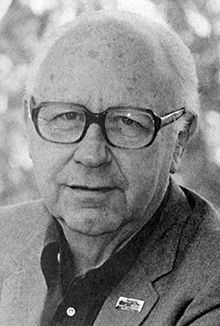
Hero photograph: Wikipedia / Wikimedia Commons (Fair use)


